

Ice Dams
Over 30 Years of Experience | Same-Day Emergency Services | Free Quotes
Ice Dams… Their Cause And Preventative Measures
What Is The Concern?
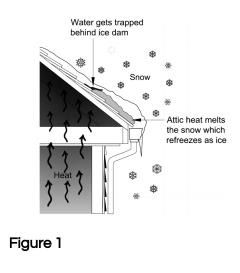
An ice dam… is a build-up of ice at the eave that may eventually back-up water under the shingles. When snow on the roof melts, the water travels down the roof and freezes when it passes over the unheated eave. As the water continues to flow, it becomes blocked by
the newly formed “ice dam”. This water then freezes, and the cycle continues. As more water freezes, it begins to back-up under the shingle tabs. As this continues further up the roof, the warmer attic space may prevent the water from freezing and this water may enter the house. Fig. 1
How Can It Affect My Roof?
There are 2 primary preventative measures that should be taken:
1. The first measure… is to install a leak barrier such as StormGuard® or Weather Watch® Leak Barrier. These membranes help to prevent water from entering through the roof deck.
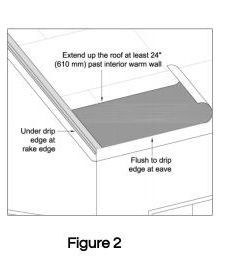
- Ice dam protection is required by most codes in northern climates and should be installed at a min. of 24” beyond the “warm wall” of the house noted in Fig. 2.
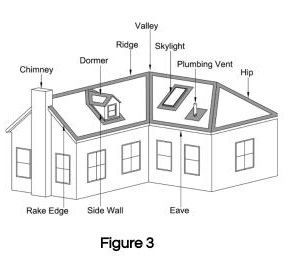
- Additionally, for added protection, leak barriers should be installed at areas as noted in Fig. 3.
2. The second measure… is proper ventilation. Heat, moisture and condensation build up under roof decks.
- GAF recommends a continuous, balanced soffit and ridge system that meets the FHA/HUD-1/300 rule that calls for 1 sq. /ft. of net free ventilation per 300 sq. ft. of attic floor space.
- Adequate ventilation can lower the temperature of the attic, which will reduce the melting of snow of the roof surface.
What Should You Do?
For a leak barrier… Weather Watch® or StormGuard® underlayment can be used as the eave protection membrane. These membranes can be installed at the areas as shown in Fig. 3 as well.
Note: While self-adhering leak barriers offer excellent, state of the art ice dam protection, extreme ice dam conditions may result in leaks when water backs up over the ice dam protection and flashings. In some extreme ice dam situations, especially if there is a “warm” roof deck (i.e. a heated, non-vented attic), hydrostatic pressure may build up which can force water through the roof system.
For ventilation… any Cobra® Ridge Vent should be installed at the ridge for exhaust, and MasterFlow® Intake Soffit Vents at the soffits for intake. All products data sheets, specifications and application instructions are available at www.gaf.com.
The latent damage from ice dams may not be immediately evident. For example, insulation could be getting wet and over time will lose its ability to perform properly. In addition, mold may begin to grow in the moist attic environment. Although ice dams are
more prevalent at the eaves, they can (and do) occur anywhere on the roof, especially where there is a change in roof surface temperatures. These areas need special consideration by roofers, specifiers or builders.
Questions?
Swift Waters Gutters & Roofing is here to help with these and other questions you may have regarding your roof. Please call us at 860-256-4799 or send us a contact request through our website at www.swiftwatersgutters.com.
